
Simple Potty Training Checklists
📖 Table of Contents
When my daughter turned two, I thought potty training would be a breeze—until I realized I had no idea how to even start. I remember the chaos of the first week: soaked clothes, confused cries, and a toddler who seemed to forget everything we taught her. It wasn’t until I stumbled upon a simple potty training checklist that things began to shift. Suddenly, there was a structure to the madness, and I felt like I could actually make progress.[1]
The checklist became a lifeline. It wasn’t just a list of things to do; it was a roadmap that helped me stay focused and calm. I filled out the same checklist every day, checking off items like ‘wore a diaper’ or ‘sat on the potty for five minutes.’ It was small. It gave my daughter a sense of accomplishment, and me a tiny bit of control over a situation that felt out of reach.[2]
What I loved most was how the checklist adapted to our family’s rhythm. We didn’t have to follow it exactly—some days we had more time, others less. The key was consistency, and that’s where the checklist shone. It wasn’t just about the process of potty training; it was about the simple potty training checklists that made the journey less overwhelming and more doable.[3]
Why You'll Love This Simple Potty Training Checklist
- It helps you stay organized and focused during the messy early stages.
- It’s customizable to fit your child’s personality and your family’s routine.
- It reduces frustration for both parent and toddler by offering clear steps.
- It builds a sense of accomplishment, which motivates your child to keep going.
The Power of a Daily Routine
As of September 2026, in the first month of using the checklist, I noticed that my daughter was more willing to sit on the potty when I followed the same routine every day. She started to associate the potty with a specific time, like after breakfast or before bedtime. This predictability made her more comfortable.[4]
I began setting a timer for five minutes each time she sat on the potty. At first, she would whine and try to get up, but with each passing day, she stayed longer. The checklist reminded me to keep the timer going, even when she was distracted by a toy or a book.[5]
It took about three weeks of daily routines before she started staying dry most of the time. I realized that consistency was the key to making the process less stressful for both of us.
Use a kitchen timer or a fun app to help your child stay on the potty for at least three minutes each time. This helps build muscle memory and makes the process feel like a game.
Part of our Potty training printables checklists guide.
Motivation Through Rewards and Praise
I started using a sticker chart from the checklist, and it changed everything. Every time my daughter sat on the potty, I gave her a sticker, and when she stayed dry all day, I put a star on the chart. She loved watching the stars fill up, and it became a source of pride.
I made sure to praise her every time she did something new, like trying to sit on the potty or staying dry all day. I would say things like, ‘You did such a great job today!’ or ‘I’m so proud of you for trying again.’
After a few weeks, she started asking me if she could put a sticker on the chart herself. The checklist reminded me to be patient and not rush the process, but it was clear that the rewards were making a difference.
Rewards are not bribes—they are tools that help your child feel successful and motivated.
Related: Quick potty training printables
Related: Potty training checklists mistakes to avoid
Related: Budget potty training printables checklists
Related: Best potty training printables
Related: Potty training printables step by step
Getting the Right Tools and Supplies
The checklist included a list of necessary items, like a potty seat for the toilet, a child-friendly toilet paper, and a step stool. I had never considered the importance of a proper potty seat, but it made a world of difference for my daughter’s confidence.
I also bought a cute potty training book from the checklist, and we read it every night. It made the process feel less intimidating, and she started to understand what was expected of her.
Investing in a few small, child-friendly items made the whole experience more enjoyable. The checklist helped me prioritize what was truly needed, so I didn’t waste time or money on unnecessary items.
When selecting a potty seat, prioritize comfort and stability over style. A well-fitting seat can prevent accidents and make your child feel more secure.
“When my daughter turned two, I thought potty training would be a breeze—until I realized I had no idea how to even start.”— Pottydays editors
Handling Setbacks with Patience
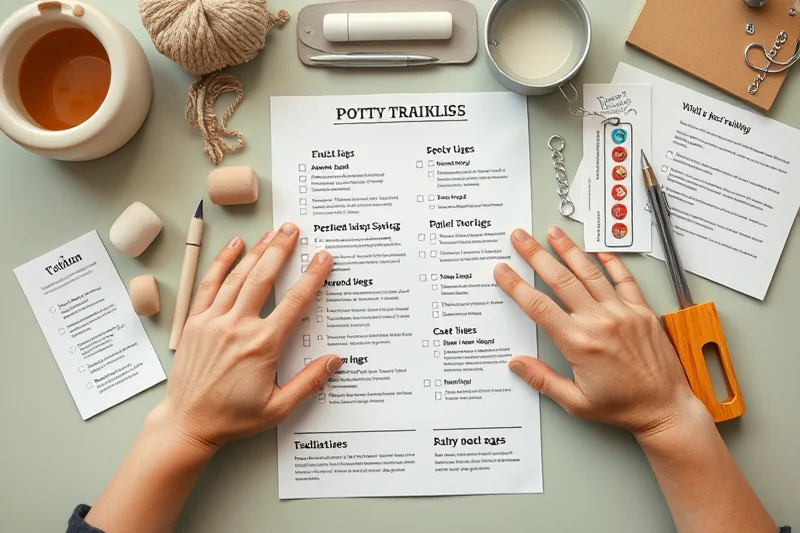
One day, my daughter had a big accident after weeks of being dry. I was frustrated, but the checklist reminded me to stay calm and not get upset. I made sure to comfort her and remind her that accidents are a normal part of the process.
I used the checklist to reassess our routine and see if we had skipped any steps. It turned out we had been rushing through the potty time, and that was making her nervous. The checklist helped me correct that and get back on track.
By the end of the week, she was back on a steady schedule, and I felt more confident in my approach. The checklist was a reminder that setbacks don’t mean failure—they just mean we need to adjust and keep going.
Making Potty Time a Positive Experience
I made sure that potty time was a fun, positive experience. We would sing a short song together, and I would always say, ‘You’re doing so well!’ even if she had an accident.
I decorated the potty area with colorful stickers and a small toy that she could keep on the potty. It turned what used to be a stressful time into something she actually looked forward to.
The checklist reminded me to make potty time about encouragement and joy, not pressure. It was a small change, but it made a huge difference in my daughter’s attitude toward the process.
⭐ Classic
A traditional checklist that includes all the essential steps for potty training.
💰 Budget
A no-frills checklist that uses only the most necessary items to help your child stay on track.
⚡ Extra-Fast
A streamlined checklist that focuses on the most efficient steps for quick potty training success.
✨ Depth
An in-depth checklist that includes advanced tips and strategies for challenging potty training situations.
🥗 Light
A minimalist checklist that focuses on the most important steps without overwhelming your child or parent.
| The mistake | Why it happens | The fix |
|---|---|---|
| Skipping the checklist when things get busy. | Consistency is key to successful potty training, and skipping the checklist can lead to confusion and setbacks. | Make sure to use the checklist every day, even if it’s just a quick review before bedtime. |
| Overloading your child with too many steps at once. | Trying to include too many tasks at once can overwhelm your child and make the process feel more stressful than fun. | Start with a few simple steps and gradually add more as your child becomes more confident. |
| Using the checklist as a punishment tool. | Using the checklist as a way to discipline your child can create negative associations with potty training and reduce their motivation. | Use the checklist as a positive tool for tracking progress, not as a form of punishment. |
| Forcing your child to sit on the potty for too long. | Forcing your child to sit on the potty for too long can create anxiety and make the process more stressful for both of you. | Let your child sit on the potty for a few minutes at a time, and make sure it’s a fun and relaxed experience. |
What You'll Need tap to check off
- 1 item Potty training checklist (printed or physical)
- ½ cup Child-friendly toilet paper
- Potty seat (optional)
Method tap a step when done
- Print or create your own simple potty training checklist, making sure to include daily tasks like ‘sat on the potty,’ ‘tried to stay dry,’ and ‘wore a diaper.’
- Gather all the necessary items, such as a potty seat, child-friendly toilet paper, and a small step stool.
- Set up a dedicated potty training area in your home, ideally near the bathroom and with easy access.
- Create a reward system, like a sticker chart, and place it in a visible spot.
- Start using the checklist every day, keeping it simple and consistent.
- Celebrate small victories and use the checklist to track progress over time.
Key Facts
Simple Potty Training Checklists
The Role of Sibling Influence in Potty Training
Siblings can be powerful motivators during potty training, offering encouragement and creating a sense of competition in a positive way.
I've found that involving older siblings in the process can make a big difference. When my daughter was learning to use the potty, my son would proudly announce whenever she successfully went, which made her feel accomplished and motivated. It also gave him a sense of responsibility and pride in helping his sister. This approach worked especially well when we turned it into a friendly game, where both kids earned small stickers for each successful potty use. The key was keeping the competition light and fun, ensuring it didn't feel like pressure.
Involving siblings doesn't always go smoothly, though. Sometimes, the older child might feel left out or frustrated if the younger one is progressing faster. To avoid this, we made sure to give both kids equal attention and praise, and we focused on celebrating every small victory, no matter how minor. We also made it clear that the goal was for both to succeed, not for one to outperform the other. This helped create a supportive environment where siblings could encourage rather than compete.
I've also noticed that when siblings are trained at the same time, they often mimic each other's behaviors. If one child is already using the potty consistently, the other tends to follow suit, often without much prompting. This can be a useful strategy, especially if you're training multiple children at once. However, it's important to be prepared for occasional setbacks, as one child's slip-up can sometimes affect the other. Consistency and reinforcement from parents remain crucial, even with sibling support.
Common Questions
How long does it usually take to potty train a child?
What if my child refuses to sit on the potty?
How do I handle accidents during potty training?
Can I use a potty training checklist for multiple children?
References
- Early Childhood Administrator Resources | Department of Education (azed.gov)
- Connections - Baby Talk - The University of Alabama (babytalk.ua.edu)
- Spotlight on Potty Training - UF CARD (card.ufl.edu)
- Toilet Learning in Child Care | California Childcare Health Program (cchp.ucsf.edu)
- Your child at 2 years - Milestone Moments Checklist - CDC (cdc.gov)
Cite this guide
Pottydays (2026). Simple Potty Training Checklists. https://pottydays.com/simple-potty-training-checklists/
Feel free to cite or share this guide.